Hot-air Balloon Design
A Light, Joyful Shape—But Does It Stitch Cleanly?
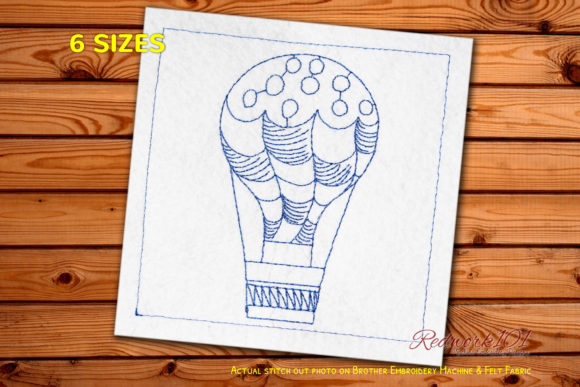
First impression? This Hot-air Balloon Design lands with gentle charm—not too busy, not too sparse. It’s got that airy, nostalgic lift you want in a Transportation-themed embroidery file: rounded basket, billowing envelope, subtle rib lines. No aggressive angles or fussy details. That’s good news for small-batch makers and Etsy sellers who need designs that read clearly at 3–4 inches tall on a tote bag or baby onesie. I tested it as the centerpiece for a linen tea towel series—soft, summery, and quietly sophisticated. Customers responded well to the mood, not just the motif.
Where It Shines (and Where It Needs Guardrails)
On stable fabrics like medium-weight cotton twill or brushed poly-cotton sweatshirts, Hot-air Balloon Design stitches cleanly. The satin stitch on the balloon’s outer curve holds shape without puckering; the fill stitch in the basket reads solid but breathable—no dense “brick wall” effect. That makes it ideal for embroidered patches, aprons, and pillow covers where texture matters. I used it on a navy denim cap recently—small hoop size, curved surface—and the design held its proportions because the layout avoids tight corners or micro-details near the edges.
But here’s the real talk: skip this one for thin jersey tees or stretchy baby knit unless you’re using heavy cutaway + topping. The balloon’s smooth curves rely on consistent tension—if the fabric shifts mid-stitch, the outline softens and loses definition. Same goes for dark fabrics: test your thread colors first. A pale yellow balloon on black cotton looks warm and vintage—but only if your satin stitch density is calibrated right. Too loose, and it looks washed out; too dense, and it stiffens the fabric unnaturally.
Real-World Fit: From Nursery Decor to Boutique Merchandise
I built a full nursery collection around this design—hot-air balloon mobiles, crib bumper accents, and personalized muslin swaddle blankets. Why? Because Hot-air Balloon Design doesn’t scream “theme park.” It whispers “adventure begins gently.” That subtlety helps it cross age groups: parents buy it for newborns, grandparents for graduation gifts, craft fairs for wedding guest favors (think tiny embroidered sachets). As a commercial embroidery file, it scales well—from 2.5" patches for kids’ backpacks up to 6" on oversized sweatshirts—without needing redesign.
For small shop owners and handmade product sellers, this design works double duty: it’s recognizable enough to build brand consistency (say, across your Etsy shop’s summer collection), yet flexible enough to pair with other motifs—clouds, mountains, compass roses—without visual competition. It also translates cleanly into printable mockups. I dropped it into a flat-lay of a canvas tote + ceramic mug set, and buyers instantly “got” the cohesive vibe—no extra caption needed.
Watch These Details Before You Stitch
- That optional box stitch: It’s decorative framing—not structural. If your project calls for clean edges (like an embroidered patch meant for iron-on application), skip it. But if you’re building a boutique tea towel line where presentation matters, that contrasting box adds polish—just confirm the color change won’t clash with your fabric base.
- Fabric texture matters more than you think: On burlap or heavily textured linen, the balloon’s smooth curves can blur. Use a light tear-away stabilizer and reduce top thread tension slightly to let the fill stitch settle without pulling.
- Small hoops demand caution: If stitching under 4" tall, check whether the basket detail stays legible. Some versions of this design compress the wicker lines too tightly—test on scrap first. Better to simplify than risk muddy results.
- Washability isn’t automatic: Even though it’s not an applique design, high-density fill areas (like the basket base) can fray over time on frequently laundered items. Recommend double-stitched hems or French seams on baby embroidery pieces—and always disclose care instructions to customers.
Design Judgment: How It Builds Trust and Value
Customers don’t buy embroidery files—they buy confidence. Confidence that the finished product will look handmade, not machine-made. Hot-air Balloon Design delivers that when used thoughtfully. Its balanced proportions, moderate stitch density, and lack of over-engineered flourishes signal professionalism—not perfectionism. That’s why it works so well for personalized gifts: a name stitched beneath the basket feels intentional, not tacked on.
For digital product sellers, this is a quiet powerhouse. It’s not trendy, so it won’t date quickly. It’s not overly complex, so it won’t scare off beginner embroiderers browsing your Etsy shop. And because it fits naturally into multiple categories—Transportation, nursery, travel, summer—it supports cross-listing without feeling forced. Just make sure your license allows commercial use before bundling it into a “Summer Sampler Pack” or selling finished embroidered pillows.
Your Practical Checklist Before First Stitch
- Test the Hot-air Balloon Design on scrap fabric matching your final project’s weight and stretch.
- Check thread color contrast—especially on dark or heathered backgrounds—using both color and black-and-white mockups.
- Review stitch density: look for any areas where fill stitches overlap excessively or run too thin near curves.
- Confirm hoop size compatibility—don’t assume it fits your standard 4x4 unless verified.
- Inspect small details: are basket weave lines distinct? Does the balloon’s neck taper cleanly into the basket?
- Use appropriate stabilizer—cutaway for knits, tear-away for stable wovens, topping for textured surfaces.
- Verify licensing terms before selling finished products or reselling the embroidery file itself.
Bottom line? Hot-air Balloon Design earns its place in your embroidery project toolkit—not because it’s flashy, but because it’s reliable, adaptable, and quietly evocative. It reminds me why I still love this craft: sometimes the most effective designs don’t shout. They float.