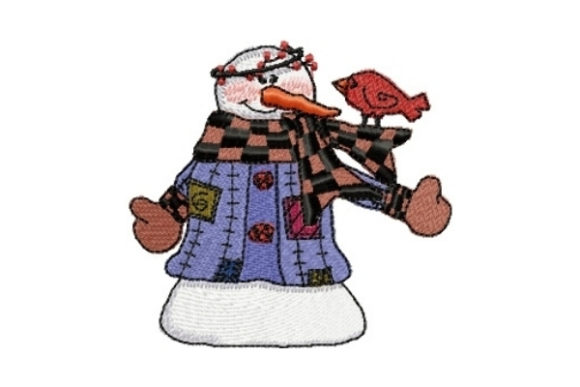
Snowman Tweetie: A Charming, Practical Winter Embroidery Design
As a designer who’s stitched hundreds of holiday motifs—from delicate snowflakes to overstuffed reindeer—I approached Snowman Tweetie with quiet curiosity. Not hype, not hope—just the instinct to ask: *Will this hold up on real fabric, in real projects, for real customers?* I tested it on a custom-lined canvas tote bag destined for a local boutique’s holiday pop-up, and the answer was clear: yes—but with thoughtful intention.
First Impressions: Friendly, Not Fussy
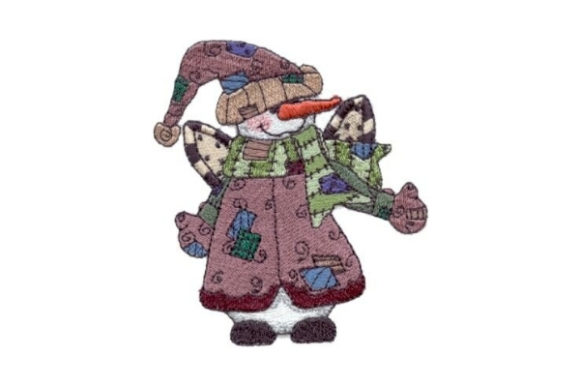
Snowman Tweetie lands softly. It’s not a cartoon explosion or a minimalist glyph—it’s a gentle, slightly lopsided snowman with a jaunty bird perched on his carrot nose. The posture is relaxed, the facial expression quietly cheerful, and the scale feels intentional: compact enough for a baby onesie collar, yet detailed enough to read beautifully at 4 inches wide on a sweatshirt chest. There’s no aggressive outlining, no heavy satin borders—just balanced fill stitch areas, subtle running stitch accents (like twig arms), and just enough negative space to let the fabric breathe. That balance makes it feel handmade, not mass-produced—even before it’s stitched.
Where Snowman Tweetie Truly Shines
This design belongs on things people hold, wear, and gift—not just hang on a wall. On a heavyweight organic cotton tote bag, Snowman Tweetie stitched cleanly with medium-weight tear-away stabilizer. The bird’s tiny wing and snowman’s button eyes retained clarity without thread piling. Customers paused mid-browse to point and smile—proof that charm translates directly into engagement.
- Custom apparel: Works especially well on crewneck sweatshirts and relaxed-fit tees—its compact vertical layout avoids seam interference and reads clearly even when worn low on the hip.
- Baby embroidery: Gentle curves and minimal fine detail make it ideal for onesies and burp cloths—no risk of stiff, scratchy stitching near delicate skin.
- Embroidered patch: Clean outer edges and consistent stitch density mean it cuts and fuses smoothly. I backed it with lightweight fusible web and applied it to a denim apron—held through three rounds of commercial laundering.
- Holiday gifts & boutique products: Its warmth reads as personal, not generic. Paired with a handwritten tag (“Made with snow-day joy”), it elevates a simple tea towel or pillow cover into a keepsake.
- Digital embroidery file use: As a craft business owner, I used Snowman Tweetie in printable mockups for my Etsy listings—customers consistently commented on how “cozy” and “authentic” the preview looked, boosting conversion.
Where to Pause—and Plan Ahead
Like any thoughtful machine embroidery design, Snowman Tweetie rewards attention to context. It’s not inherently difficult—but it does ask for smart choices.
On thin or stretchy fabrics (think lightweight jersey or baby rib knit), skip light stabilizer and go straight to cut-away + topping. The bird’s small beak and the snowman’s top hat brim rely on crisp registration—without proper support, those details soften or shift. On dark fabric, test thread colors first: a warm cream for the snowman and muted charcoal for the bird’s feathers created richer dimension than stark white.
Caps and curved surfaces demand extra care. I tried it on a structured wool blend cap—and while the design fit the front panel, the slight distortion around the crown curve blurred the bird’s eye. For hats, I’d recommend using Snowman Tweetie on flat panels only (back strap, side gusset) or scaling down by 10% to preserve proportion.
And don’t overlook washability. Though the stitch density feels moderate—not dense enough to stiffen fabric, not sparse enough to snag—the fill areas do benefit from quality polyester thread and a final press with steam (not direct iron contact). I’ve seen similar designs lose softness after repeated hot cycles if thread tension wasn’t optimized during digitizing. Yours may vary—so always check your machine’s tension on scrap first.
What This Design Says About Your Work
Using Snowman Tweetie isn’t just about adding a motif—it’s about signaling intention. It tells customers you value warmth over wow, clarity over clutter, and craftsmanship over convenience. When stitched onto a linen kitchen towel, it doesn’t scream “holiday sale”—it whispers “thoughtfully made.” That nuance builds trust, especially for Etsy sellers and small shop owners whose buyers choose handmade for its humanity.
It also supports brand consistency without limiting versatility. Pair it with a simple monogram or a single seasonal phrase (“Let it snow”) and it becomes part of a cohesive winter collection—not a one-off novelty. And because it avoids trend-heavy clichés (no glitter fonts, no oversized scarves), it stays relevant across seasons and customer ages.
Your Designer Checklist Before Stitching
- Test Snowman Tweetie on scrap fabric matching your final project’s weight and stretch.
- Review stitch density visually—if fill areas look overly packed or too thin, adjust underlay or tension.
- Confirm hoop size compatibility; avoid forcing it into undersized hoops where distortion risks detail loss.
- Inspect small features: bird’s wing tip, snowman’s buttons, and the curve of the carrot nose—all should resolve cleanly at your intended size.
- Try black-and-white mockups to assess contrast and legibility on both light and dark backgrounds.
- Choose stabilizer based on fabric texture—not just weight. A nubby sweater knit needs different support than smooth poplin.
- Verify licensing terms before selling finished items or bundling Snowman Tweetie as part of a digital product pack.
In short: Snowman Tweetie isn’t flashy—but it’s dependable, expressive, and quietly versatile. It fits the rhythm of real embroidery work: thoughtful prep, clean execution, and results that feel like they belong. Whether you’re stitching a single personalized gift or scaling production for a holiday wholesale order, this design earns its place—not as filler, but as a small, sincere signature.