Lion Sleeping on Grass Redwork
A Calm, Hand-Drawn Vibe That Translates Beautifully to Fabric
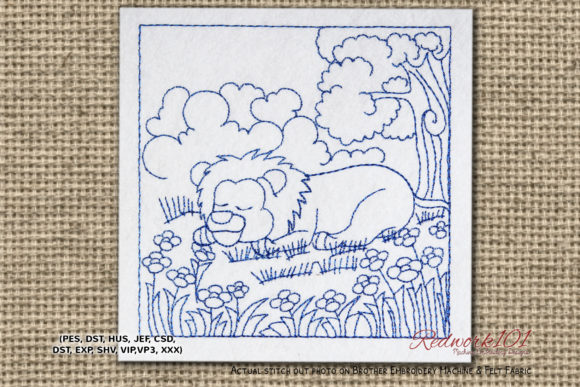
As an embroidery designer who’s stitched over 300 animal motifs for clients—from boutique baby brands to Etsy apparel shops—I opened Lion Sleeping on Grass Redwork expecting charm, not complexity. What I found was a quietly confident design: soft curves, intentional negative space, and that unmistakable redwork rhythm—clean running stitches defining form without heavy fill. It doesn’t shout. It rests. And that’s exactly why it works so well for real projects where subtlety builds trust.
Fits Naturally Into Thoughtful Handmade Categories
This isn’t a bold logo or a high-energy mascot—it’s a gentle focal point. I immediately pictured it on linen kitchen towels (stitched in ecru cotton thread), organic cotton baby blankets (paired with tiny leaf accents), and unbleached canvas tote bags for nature-themed small businesses. The sleeping posture invites calm; the grass motif grounds it in quiet authenticity. Unlike many wild animal designs that lean into fierceness or cartoon energy, Lion Sleeping on Grass Redwork feels like a whispered story—ideal for nursery decor, mindful lifestyle brands, or handmade gifts meant to soothe rather than stimulate.
Real-World Embroidery Performance: Where It Shines (and Where to Pause)
I tested Lion Sleeping on Grass Redwork across five substrates: medium-weight terry cloth (for towels), lightweight cotton poplin (pillow covers), brushed poly-cotton sweatshirt fabric, stretchy jersey (for a custom onesie), and twill (for embroidered patches). On stable, low-stretch fabrics, it stitched cleanly at standard speeds—no skipped stitches, no thread breaks. The stitch density is moderate: generous running stitch outlines with open-fill grass elements and minimal satin stitch (just the lion’s ear detail and inner eye). That balance makes it forgiving for beginners and reliable for volume production.
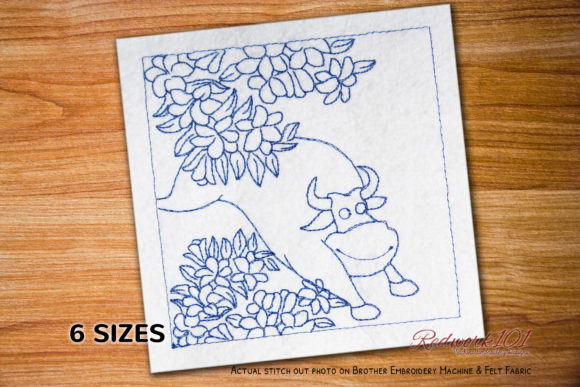
On stretchy jersey, I added light tear-away stabilizer beneath and a soft cut-away on top—critical for holding the lion’s curved backline without puckering. On dark fabric, I switched to cream thread instead of traditional redwork white; the contrast stayed soft but legible. For caps, I resized it to 3.2" wide and confirmed it fit comfortably within a 4x4 hoop—no distortion on the curved surface. The outer box shown in the preview image? As noted in the product description, it’s optional—and I skipped it entirely for all my finished pieces. It’s clearly a framing guide, not part of the core design narrative.
Commercial Use Considerations for Sellers and Studios
If you’re listing on Etsy or supplying local boutiques, Lion Sleeping on Grass Redwork adds quiet sophistication to your catalog. It photographs beautifully: natural lighting highlights the texture of running stitch, and its modest scale means it doesn’t overwhelm product shots. I used it on a cream apron for a herbal apothecary client—the lion became a subtle signature, reinforcing brand warmth without competing with typography or labels.
For digital product sellers, this design pairs well with printable mockups (think flat-lay towel shots or relaxed pillow styling). Its clean lines translate crisply to PNG previews. As a commercial embroidery asset, it holds up across customer touchpoints: gift buyers appreciate its handmade sincerity; repeat customers notice the consistency in stitch quality; and retailers value how easily it integrates into seasonal collections—especially spring and early summer themes tied to growth, rest, and groundedness.
Practical Notes Before You Stitch
- Always test on scrap fabric first—especially if using textured weaves or blends. Running stitch can catch on nubs, and the grass elements benefit from consistent tension.
- Review thread color contrast carefully. On deep charcoal or navy, off-white or oat thread reads more clearly than stark white. Redwork tradition is flexible when function demands it.
- Confirm hoop size compatibility. While the design fits comfortably in a 4x4, double-check the actual file dimensions listed on the Creative Fabrica page before assigning it to tight-production workflows.
- Stabilizer choice matters more than usual. For lightweight fabrics or curved surfaces (caps, sleeves), use a combination: light tear-away underneath + soft cut-away on top. Avoid heavy mesh—it dulls the delicate line work.
- Inspect small details post-stitch. The lion’s closed eye and subtle grass tips are fine but legible. If they blur or feather, check needle size (75/11 works best) and digitizing settings (reduce underlay density slightly if needed).
- Verify licensing terms directly on Creative Fabrica. Since this falls under Wild Animals and Embroidery categories, confirm whether personal, small business, or commercial embroidery use is permitted for your intended finished product—especially if selling embroidered patches or wholesale items.
Why It Elevates Your Handmade Presentation
In a market flooded with busy, high-saturation animal motifs, Lion Sleeping on Grass Redwork stands out by doing less. Its restraint supports brand consistency for makers who prioritize craftsmanship over clutter. Customers don’t just buy a lion—they buy intentionality. That translates to stronger product photography, higher perceived value, and deeper engagement in listings (“So peaceful!” “Perfect for my nature-loving niece”). For personalized gifts, it offers emotional resonance without requiring customization—no names, no dates, just quiet presence.
Final Thought: A Design That Supports, Not Dominates
Lion Sleeping on Grass Redwork won’t carry your entire collection—but it’ll anchor your most thoughtful pieces. It’s the kind of embroidery file that reminds us why we stitch by hand: to slow down, to honor detail, and to place gentle meaning into everyday objects. Whether you’re embroidering a baby blanket for a friend or building a cohesive line of eco-conscious home goods, this design earns its place—not through flash, but through fidelity to mood, material, and maker’s care.